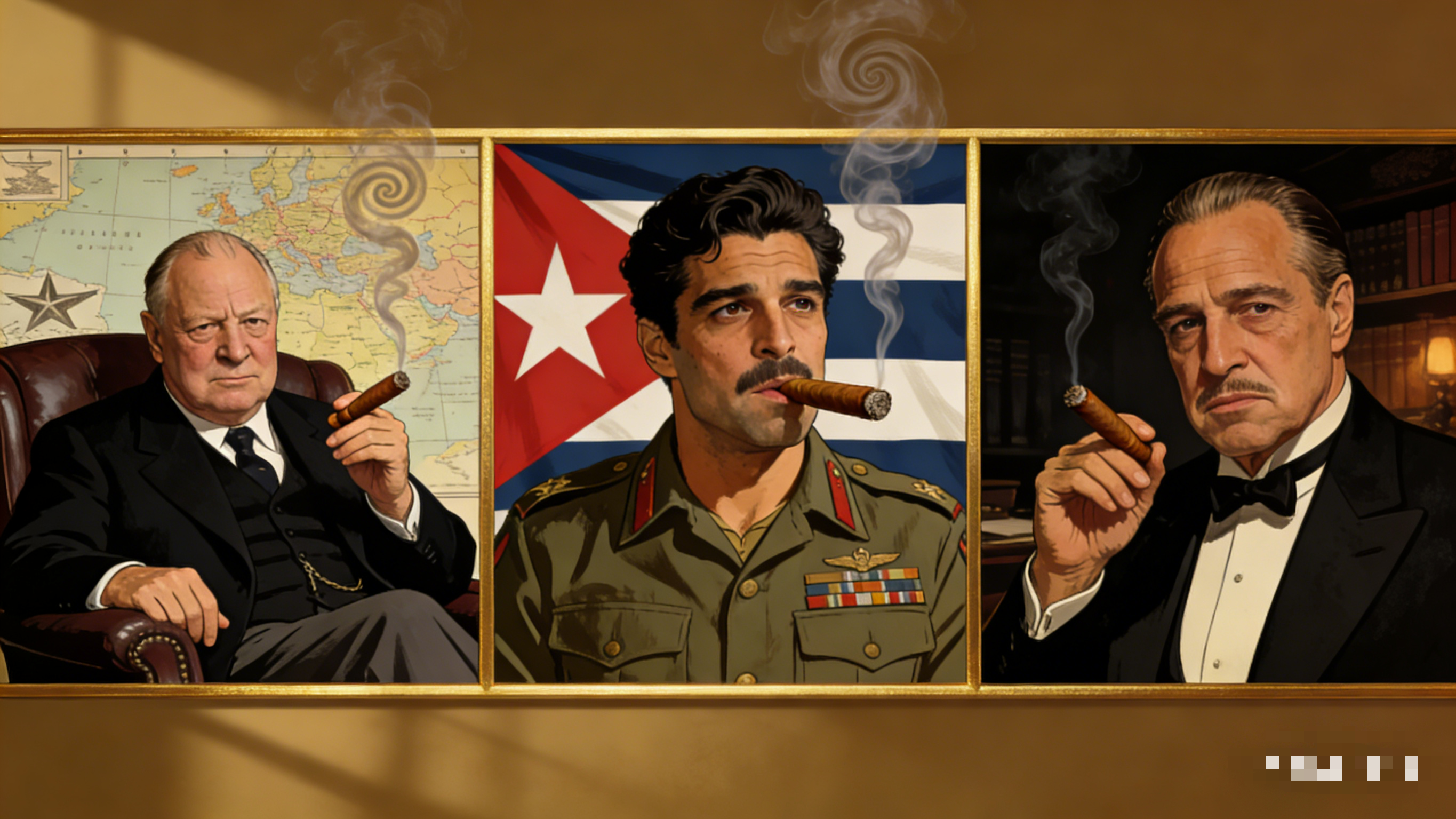
A cigar is never just a cigar. In the hands of certain figures, it transforms into a powerful symbol of personality, power, and philosophy. From the battlefields of history to the dark drama of cinema, the smoke has woven tales far beyond tobacco.
Take Sir Winston Churchill. His image—jaw set, fingers clasping a robust Romeo y Julieta—is inseparable from the bulldog spirit of British defiance during World War II. The cigar was his trademark, a prop of unwavering resolve. It signaled contemplation during strategy meetings and became a gesture of triumphant relief. To see Churchill without his cigar would be to see a lion without its mane; the symbol completed the man, representing steadfastness and an indomitable will to persevere.
In the realm of fiction, few scenes are as iconic as Marlon Brando’s Don Vito Corleone in "The Godfather." The opening wedding sequence, where the Godfather listens to requests in his shadowy study, is punctuated by the quiet, ominous glow of his cigar. Here, the cigar is not relaxation; it is the embodiment of quiet, absolute authority. The slow burn mirrors his deliberate, patient power. Smoke shrouds his expressions, adding layers of mystique and unspoken threat. It’s a tool of intimidation and a badge of patriarchal control, defining the aesthetic of cinematic power for generations.
Then there’s the "McCrae" cigar, often associated with the rugged individualism of the American frontier, perhaps reminiscent of figures like cavalrymen or explorers. While less defined than Churchill’s, this archetype uses the cigar to signify a gritty, self-reliant masculinity—a companion in solitude or after hard-won battles. It’s a symbol of the contemplative, resilient outsider.
Even Che Guevara’s revolutionary image, often captured with a cigar, fused the act with rebellion and intellectual fervor. It was a statement of non-conformity and a shared ritual among comrades.
These enduring images teach us that a cigar can be a protagonist's silent monologue. It’s a prop of character development. Churchill’s defiance, Corleone’s menace, the frontiersman’s grit—each puff adds depth, communicating traits more eloquently than words often can. Furthermore, it serves as a visual anchor for an era, evoking the smoky war rooms of the 1940s or the moral shadows of 1970s cinema.
Ultimately, the cultural power of these scenes lies in their universal shorthand. We don't just see a man with a cigar; we see leadership, we see menace, we see contemplation. The smoke becomes a narrative itself, lingering long after the scene ends, reminding us that some of history’s most powerful statements were made in perfect, silent clouds.