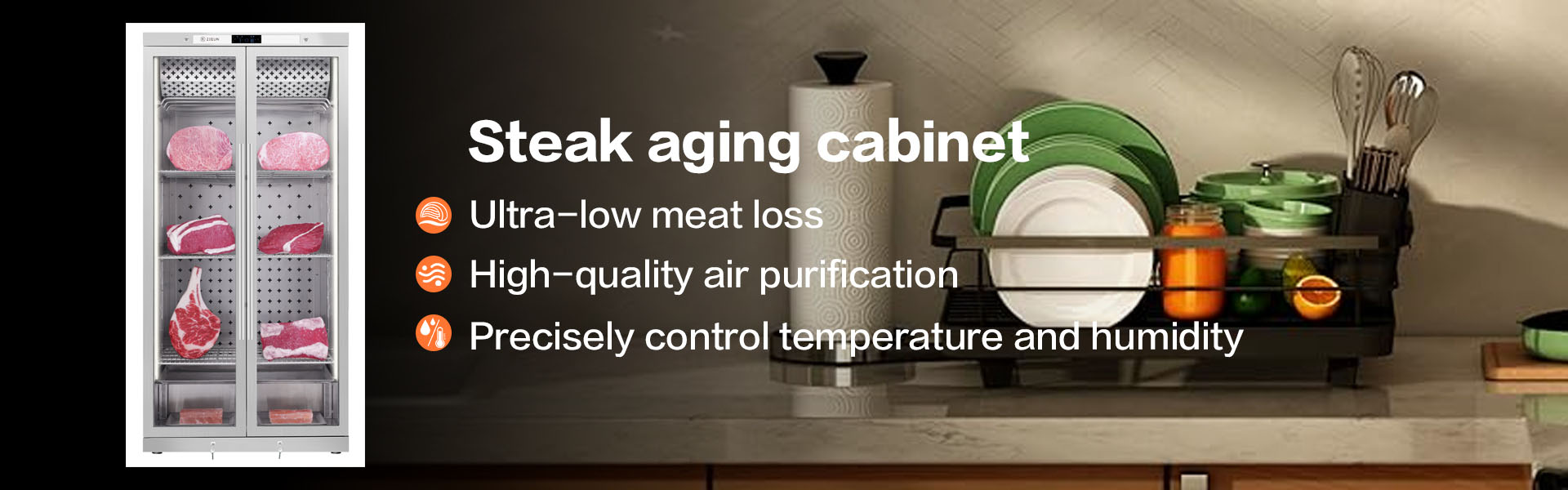
The allure of dry-aged meat is undeniable — a profound depth of flavor, a tender, buttery texture, and a rich, nutty aroma that elevates a simple steak into a culinary event. For centuries, this transformation was an unpredictable art, confined to the cold, humidity-controlled caves and cellars of master butchers. Today, modern **dry-aged meat processing cabinets** have democratized this craft, bringing scientific precision to an ancient process. But how do these technological marvels actually work?
At its core, a dry-aging cabinet doesn't just chill meat; it meticulously engineers and maintains a **complete micro-ecosystem** optimized for enzymatic magic and controlled dehydration. It replaces guesswork with data, turning time into your most valuable ingredient.
#### **The Three Pillars of the Process: A Controlled Breakdown**
The cabinet's operation hinges on mastering three interconnected environmental factors that guide the meat's metamorphosis.
**1. Precision Temperature Management (The Conductor of Enzymes)**
The cabinet maintains a constant, cold temperature, typically between **0°C and 4°C (32°F - 39°F)**. This serves a dual purpose:
* **Safety First:** It keeps the meat safely out of the "danger zone" where harmful pathogenic bacteria multiply rapidly.
* **Enzyme Activation:** This specific cold range is the sweet spot for **natural proteolytic and lipolytic enzymes** present in the meat. These enzymes slowly break down tough muscle fibers (proteins) and fats, which is the primary reason dry-aged meat becomes exceptionally tender. The flavors also concentrate and evolve, developing those sought-after nutty and umami notes.
**2. Intelligent Humidity Control (The Master of Moisture Loss)**
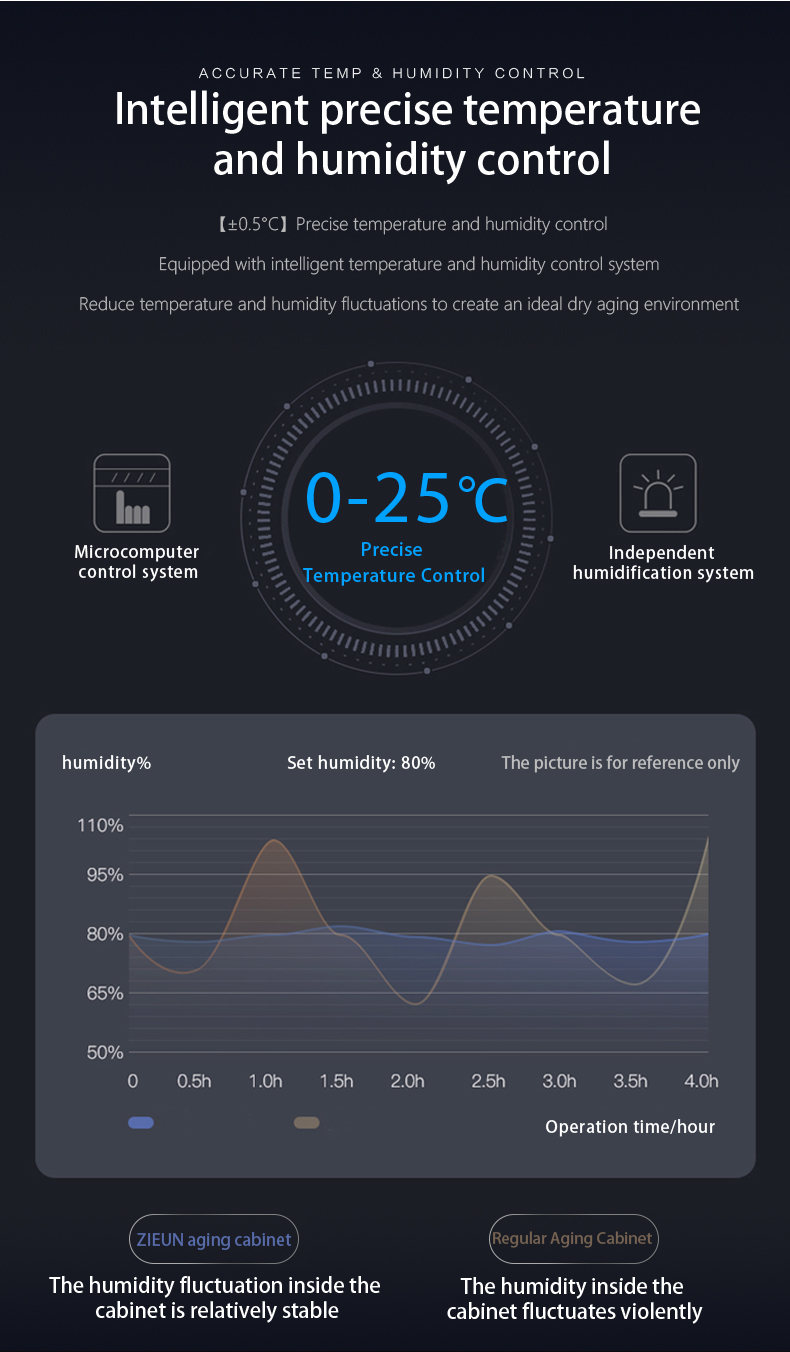
Humidity control is arguably the most critical and delicate function. The cabinet actively regulates relative humidity (RH) within a range of **roughly 75% to 85%**.
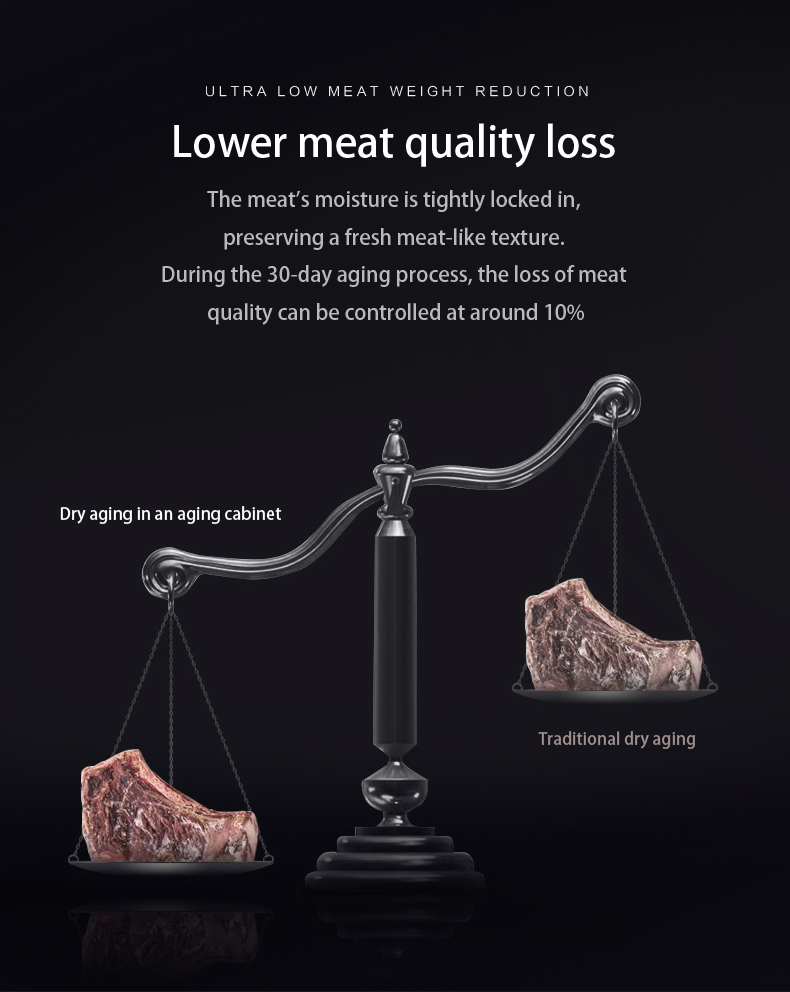
* **The Goal:** To achieve slow, steady moisture evaporation. If humidity is too low, the meat will dehydrate too quickly, creating a hard, inedible crust and compromising yield. If humidity is too high, surface spoilage and undesirable bacterial growth become risks.
* **The Result:** This controlled "dryness" is what *concentrates* the flavor. As water evaporates, the taste compounds become more intense. It also promotes the formation of a protective, flavorful outer crust (the pellicle).
**3. Sterilized Airflow Circulation (The Guardian of Hygiene)**
Stagnant air is the enemy of even aging and a friend to spoilage. A high-quality cabinet employs a **multi-directional, forced-air circulation system**.
* **Uniformity:** It ensures every part of every cut experiences the same temperature and humidity, preventing "micro-climates" within the cabinet.
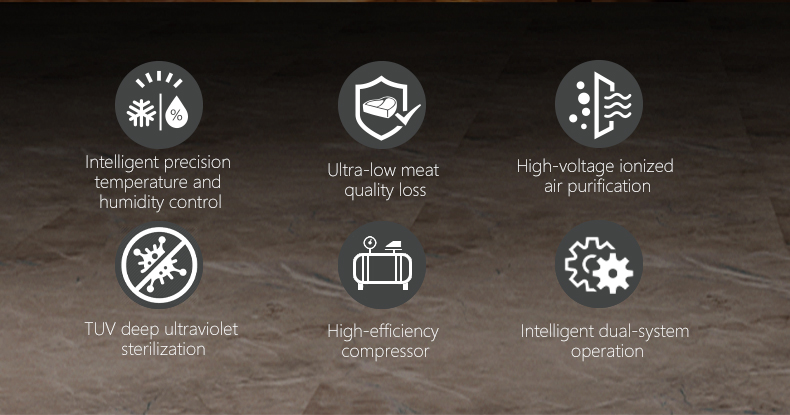
* **Purification:** Advanced systems integrate **UV-C light technology and HEPA-grade air filters**. The UV-C light neutralizes airborne microbes (bacteria, molds, yeasts), while the filter removes dust and spores. This allows the growth of beneficial, flavor-contributing molds (like *Thamnidium*) while aggressively suppressing harmful pathogens and spoilage organisms.
#### **Beyond the Basics: The Technology Inside a Premium Cabinet**
While the above principles are universal, premium cabinets from direct manufacturers incorporate features that elevate reliability and results:
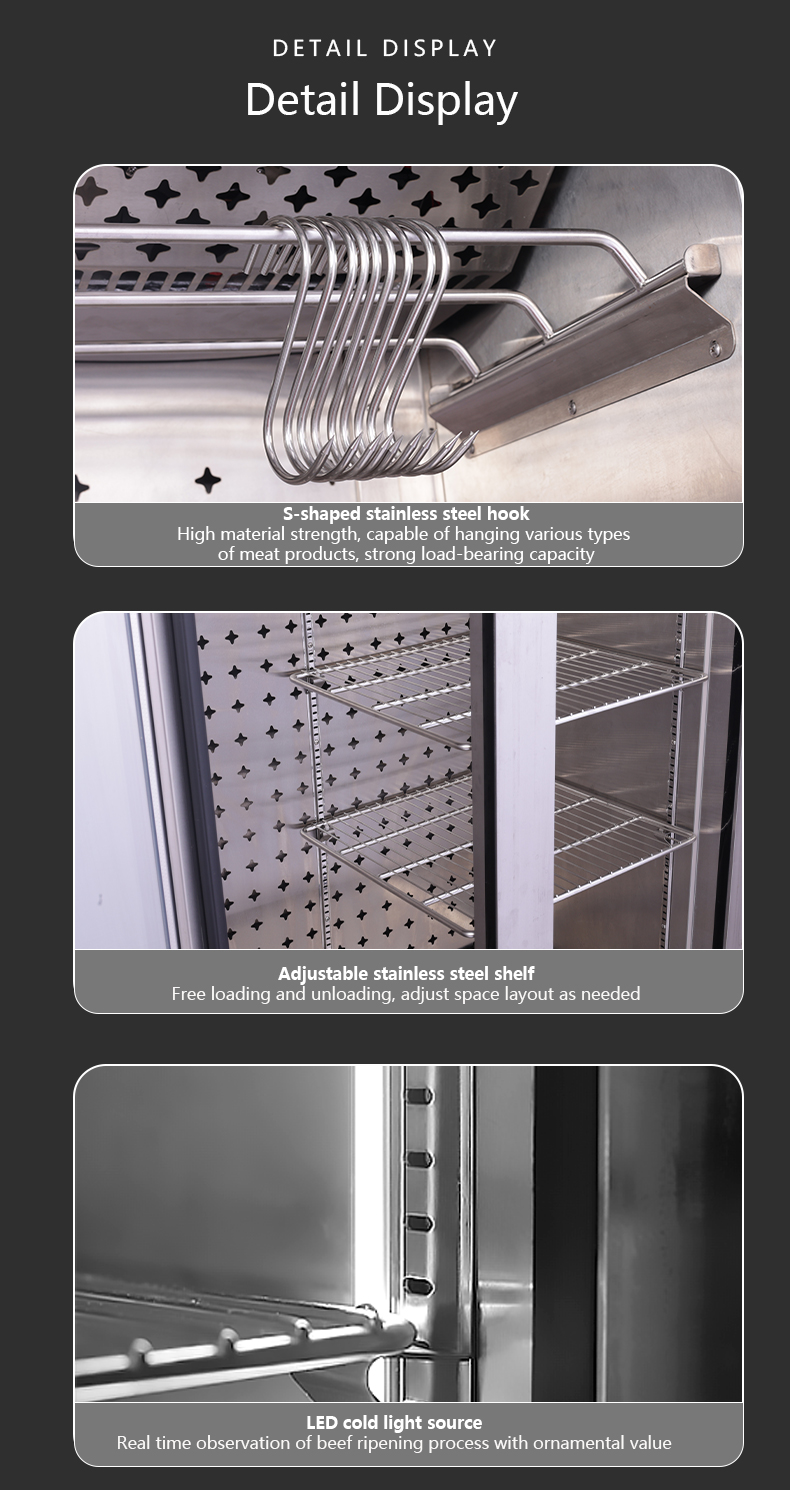
* **Hygienic Full-Stainless Steel Construction:** Non-porous, corrosion-resistant, and easy to sanitize, ensuring a clean environment for every batch.
* **Digital Control Panels:** Provide at-a-glance monitoring and precise setting of all parameters, often with data logging.
* **High-Capacity, Adjustable Shelving:** Designed to hold full primal cuts, maximizing space and commercial viability.
#### **From Raw Cut to Culinary Masterpiece**
Inside this controlled chamber, a silent symphony takes place over weeks:
* **Week 1-2:** Enzymatic breakdown begins. The surface dries, forming the initial pellicle.
* **Week 3-4:** Flavor concentration accelerates. Nutty and cheesy notes develop. Tenderness increases markedly.
* **Week 5+:** For the bold, intense, funky, and profoundly tender flavors characteristic of long-aging emerge.
#### **Conclusion: Precision Creates Perfection**
A dry-aging cabinet is more than an appliance; it's a **biochemical incubation chamber**. It works by leveraging technology to recreate and perfect the natural conditions that turn a good piece of meat into an extraordinary one. For chefs, butchers, and serious enthusiasts, it transforms dry-aging from a high-risk, space-intensive art into a repeatable, profitable, and consistently spectacular science.
**Ready to harness the science of flavor?** Explore our range of professional dry-aging cabinets, where precision engineering meets culinary ambition. Contact us, your direct manufacturer, to find the perfect solution for your kitchen.